
Surfing in Kiwengwa, Zanzibar DPC Surf Sessions
Reef Waves, Ocean Adventures and the Thrill of Your First Ride
October 2026
Surfing in Kiwengwa, Zanzibar
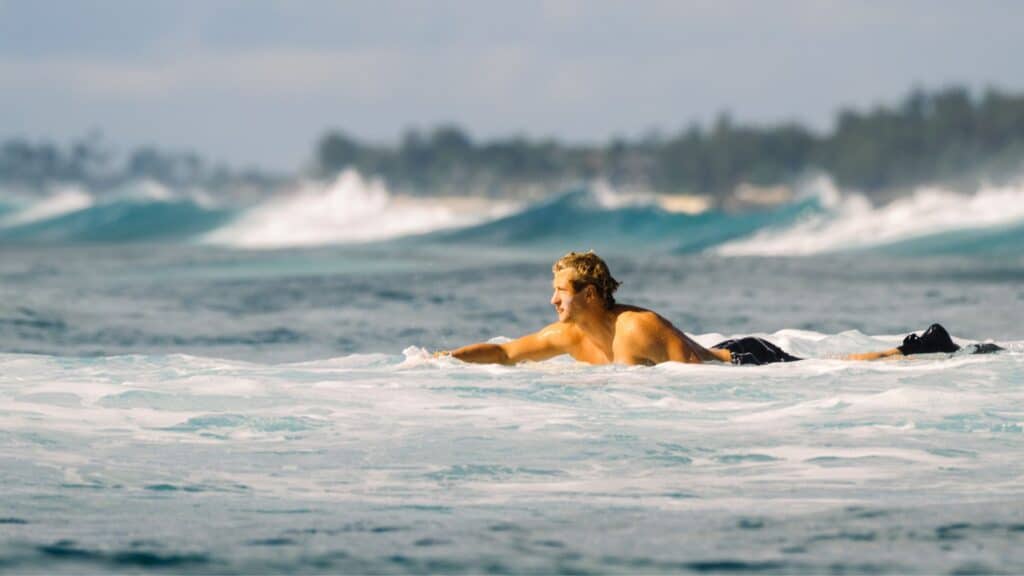
The boat heads towards the reef. Behind you, Kiwengwa’s white sandy beach stretches along the coast. Ahead, waves roll in from the Indian Ocean, breaking on either side of a passage through the reef. You grab your board, listen to your instructor and get ready to paddle.
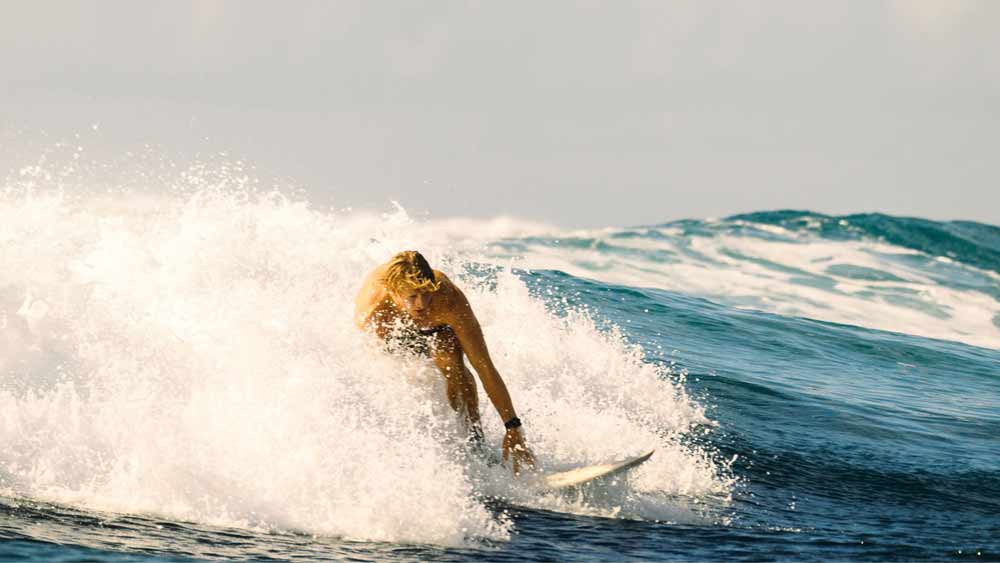
Then comes your wave. A few strong strokes, your hands on the board, your feet underneath you—and suddenly, you are riding.
That feeling is what keeps us heading back out.
Zanzibar may be best known for its beaches, turquoise lagoons and kitesurfing, but there is plenty to discover with a surfboard, too. Over the past year, our team has spent time exploring the waves in Kiwengwa, testing different tides, watching the wind and comparing the experience with other spots around the island.
The more we explore, the more we appreciate the possibilities right in front of our watersports centre.
Three Kilometers Offshore: An Adventure Beyond the Beach
This is no ordinary paddle out from the sand. Our surf spot lies approximately three kilometres from Kiwengwa Beach, where waves break over the offshore reef, surrounded by the Indian Ocean.
The adventure starts with the boat ride. As we leave the shore behind and the reef comes into view, the excitement builds. Soon, you are in the water, watching the next set approach, with Zanzibar’s coastline stretching across the horizon behind you.
It is a special way to experience the island: out at the reef, catching waves far beyond the beach, with your instructor guiding you and our support boat nearby throughout the session.
Being this far offshore makes the boat an essential part of the experience. It takes us to the break and stays with the group while we surf, keeping safety support and drinking water within easy reach.
What Makes Kiwengwa Special?
Our local surf spot sits around a natural passage through the reef, connecting the sheltered lagoon with the open ocean. Waves break on both sides of this entrance, giving us different areas to explore as the conditions change.
This variety is a big part of the appeal. One side may offer a better ride on a particular day, while the other comes to life under a different wind or swell direction. Smaller waves on the inside of the reef can provide opportunities for learning, while the outer break offers a more demanding experience for confident surfers.
Getting to know these differences takes time on the water. We have now been testing the spot for more than a year, alongside visits to other surf locations around Zanzibar. Each session adds to our understanding of how Kiwengwa works—and helps us choose the most suitable area for our guests.
Some days are about relaxed rides and building confidence. Others bring more energy and a challenge for experienced riders. That changing character is part of what makes surfing here so exciting.
The Tide Sets the Schedule
In Kiwengwa, a great surf session starts before you even pick up a board. It starts with choosing the right time.
The tide has a major influence on the depth over the reef and the way the waves break. At very low tide, the water becomes too shallow, limiting the areas we can surf and increasing the risk of contact with the reef.
We generally aim to surf when the tide is between 1.5 and 3 metres. Within that window, we choose the session time according to the day’s swell, wind and the experience of the group.
That means surfing does not follow the same timetable every day. Sometimes the best opportunity is early in the morning; on another day, we may need to wait until later.
Our advice? Leave a little flexibility in your holiday plans. Working with the tide gives us the best opportunity to get you onto suitable waves.
Wind Can Change Everything
A wave can look very different depending on the wind.
Light winds often give us a cleaner surface, making it easier to read the waves, paddle into position and concentrate on your ride. Offshore winds can help waves hold their shape, while onshore winds tend to make the surface choppier and the waves less organised.
Stronger winds can also make paddling and positioning more demanding. This is why we look at the whole picture before heading out: tide, swell, wind strength and wind direction all matter.
In Zanzibar, two seasonal winds play a major role in this changing picture: Kusi and Kaskazi.
Kusi: Southeasterly Winds from June into October
The Kusi is Zanzibar’s southeast trade-wind season. In Kiwengwa, it generally becomes established during June, brings its strongest summer conditions through July and August, and often continues through September into October.
During this season, our team has frequently found better waves on the right side of the reef passage. The exact conditions still depend on the swell and the day’s wind direction and strength.
For surfing, we look for a suitable combination of waves and manageable wind. A lighter morning breeze can offer a good opportunity before the wind builds later in the day—provided the tide is right.
Kaskazi: Northerly Winds from December to March
The Kaskazi brings winds from the north and northeast, generally from December to March. It often takes time to settle during December before becoming more established in January and February.
With the change in wind direction, the reef takes on a different character. From our experience, the left side of the passage frequently offers better surfing opportunities during these northerly conditions.
As with Kusi, the season gives us a useful starting point for planning. We still assess the tide, swell and actual wind before choosing where to surf.
Between the Seasons
The change between Kusi and Kaskazi can bring lighter or more variable winds. When suitable swell reaches the reef, these calmer periods can provide enjoyable opportunities for surfing.
A quiet day for kitesurfing can become an exciting day with a surfboard. Staying flexible helps us make the most of whichever conditions the ocean delivers.
Why We Love an Early Morning Session
There is something special about heading out while the beach is still quiet.
The air is cooler, the light stretches across the water, and you have a whole day ahead of you—with a surf session already underway.
Morning conditions are often enjoyable because the wind tends to be lighter. When the tide lines up, we can leave as early as 6:00 am.
Yes, it means setting an alarm on holiday. But once you are at the reef, watching the next set approach, getting out of bed suddenly feels like an excellent decision.
Early starts depend on the tide and conditions, so we will help you find the right opportunity during your stay.
Your First Waves: Start Small, Build Confidence
You do not need to be an experienced surfer to enjoy the excitement of catching a wave.
For beginners, we usually choose smaller waves on the inside of the reef when conditions are suitable. The aim is to help you learn, practise and build confidence step by step.
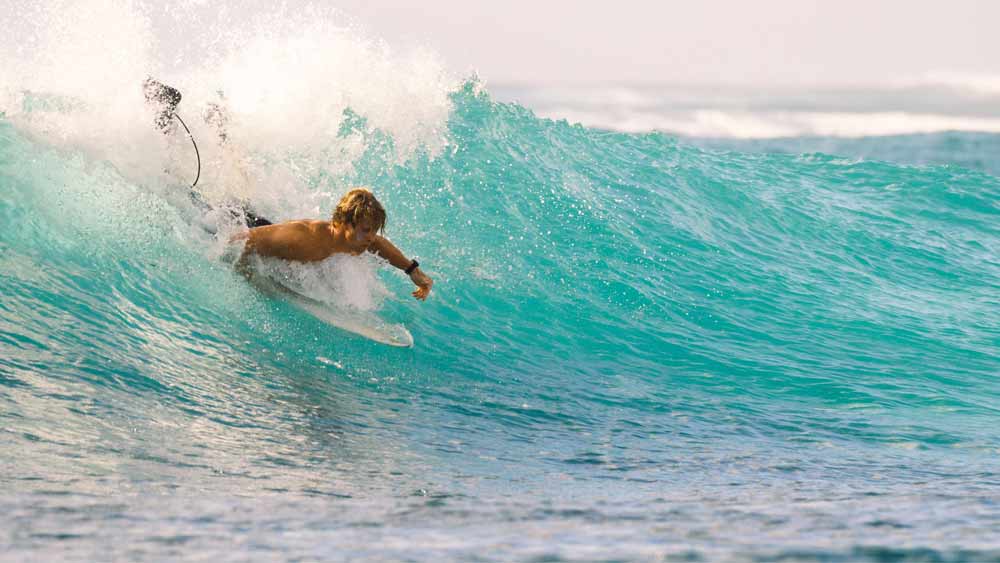
Our instructors guide you through the essentials: how to position yourself on the board, paddle effectively, prepare for the wave and move into a standing position. We work with your pace, helping you understand what to adjust between attempts. And there will be attempts! You might stand for a moment and fall. You might catch a wave on your knees before getting to your feet. Then, when everything comes together, you feel the board carry you forward—and immediately want another go. Those first rides are often the highlight of the session. Every small improvement gives you something to build on, and every wave offers another chance.
Ready for More? Explore the Outer Break
For confident surfers, the outer reef brings a different kind of session.
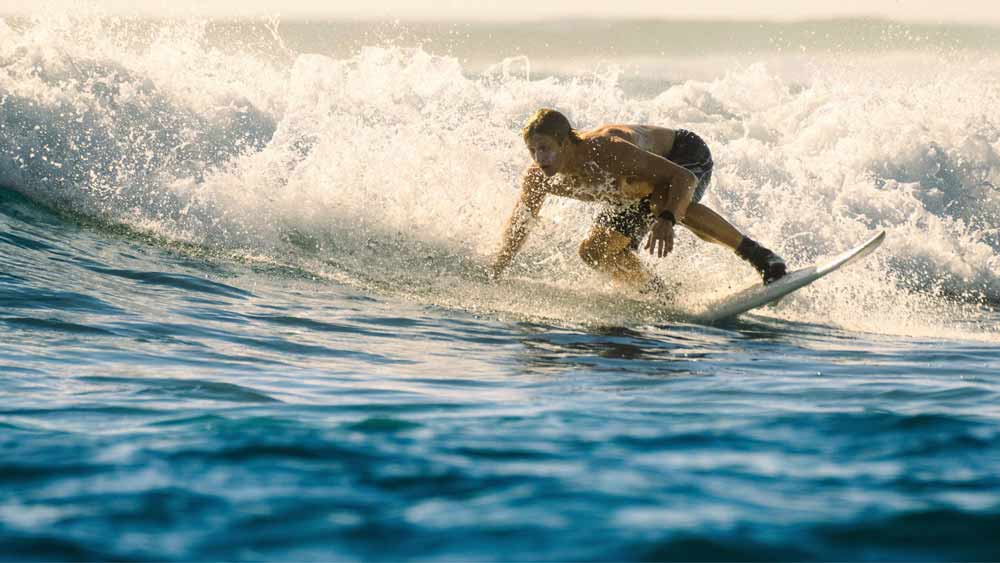
When conditions allow, waves here can reach around two metres, offering more power and a greater challenge than the smaller waves inside. We decide whether to head outside based on the conditions and the riders’ experience.
You might be working on catching waves more consistently, improving your positioning or making more controlled turns. Our instructors help you get familiar with the spot, identify where to position yourself and make the most of the conditions available.
Big Boards, More Stability, Plenty of Fun
For beginner guided sessions, we mainly use longboards.
Their length and volume provide a stable, forgiving platform, helping you practise your balance and making it easier to get started. A board with enough volume gives you more support as you learn to paddle, catch waves and stand up. Longboards are also great for developing your technique. As your confidence grows, you can begin working on direction, balance and turns, discovering how much you can do with small changes in body position.
Shorter boards offer different turning possibilities for experienced riders, but choosing the right board is about matching the equipment to the surfer and the conditions.
We also plan to expand our selection with additional hardboards as our surf programme develops, giving returning guests more options as they progress.
How Long Will You Surf?
A typical session includes around one hour in the water, depending on your energy, experience and the conditions.
Surfing is active. Between paddling, balancing and climbing back onto your board, you will quickly understand why an hour can feel like a proper workout.
For guests with energy to spare, and when the tide window allows, longer outings can extend to as much as three hours. The duration always needs to work with the conditions—we want you to enjoy your time on the water while you still have the energy to catch that next wave.
What Is Included?
We organise the equipment and boat support so you can focus on learning and enjoying the waves. We provide:
- A surfboard suited to your level
- An instructor to guide your session
- Boat transport to and from the reef
- Reef shoes
- Drinking water on board
- Boat support throughout your time in the water
Add Some Waves to Your Zanzibar Holiday
Surfing in Kiwengwa gives you a chance to get active, learn something new and experience the coast from a different perspective. You head beyond the beach, spend time at the reef and discover how much fun a single wave can deliver.
For beginners, it could be the moment you stand up for the first time. For more experienced surfers, it could be finding your rhythm at a new break. Either way, there is a good chance you will come back to shore tired, smiling and talking about your favourite ride.
Get in touch with our team to plan your surf session in Kiwengwa. Tell us your experience level and the dates of your stay, and we will help you find a suitable tide window.
Ride with Duotone Pro Center Zanzibar
Duotone Pro Center Zanzibar brings together professional instruction, premium equipment and one of the island’s most versatile lagoon locations. The center offers wave surfing, kitesurfing, wingfoiling, kitefoiling, windsurfing and SUP for every level, from complete beginner to independent rider.
The team can help you read the day’s wind and tide, select the right setup and choose the best part of the lagoon for your session. That local guidance is what turns a good day on the water into a great one.
Your next holiday highlight might be waiting at the reef
Most Popular Articles
Zanzibar Wind Season Calendar | Kitesurfing, Wingfoiling & Windsurfing in Kiwengwa
Zanzibar Wind Season
Kiwengwa Lagoon Explained: Tides, Wind Windows and Watersports Conditions
Kiwengwa Lagoon Explained